

THINGS TO LOOK OUT FOR WHEN SELECTING YOUR NATURAL STONE
Finalizing a material selection for your countertops can be both exciting and overwhelming. With so many beautiful options available, it’s important to understand what characteristics can make a slab more delicate than others.
At Capital Granite, we’ve worked with a wide range of natural stone over the years, and we know that not all slabs were created equal. Stone is formed deep within the earth, which means every type—whether granite, marble, or quartzite—comes with unique textures, densities, and durability.
Some stones are stunning in appearance but can pose challenges during fabrication or over time. These characteristics don’t make fabrication impossible, but we believe it’s important for homeowners and trade partners to understand the potential obstacles before making a final choice. We also believe that the grains or textures that are affiliated with most natural stone should be appreciated as a unique characteristic of the material.
Our mission is to source high-quality materials that not only look beautiful but also stand the test of time.
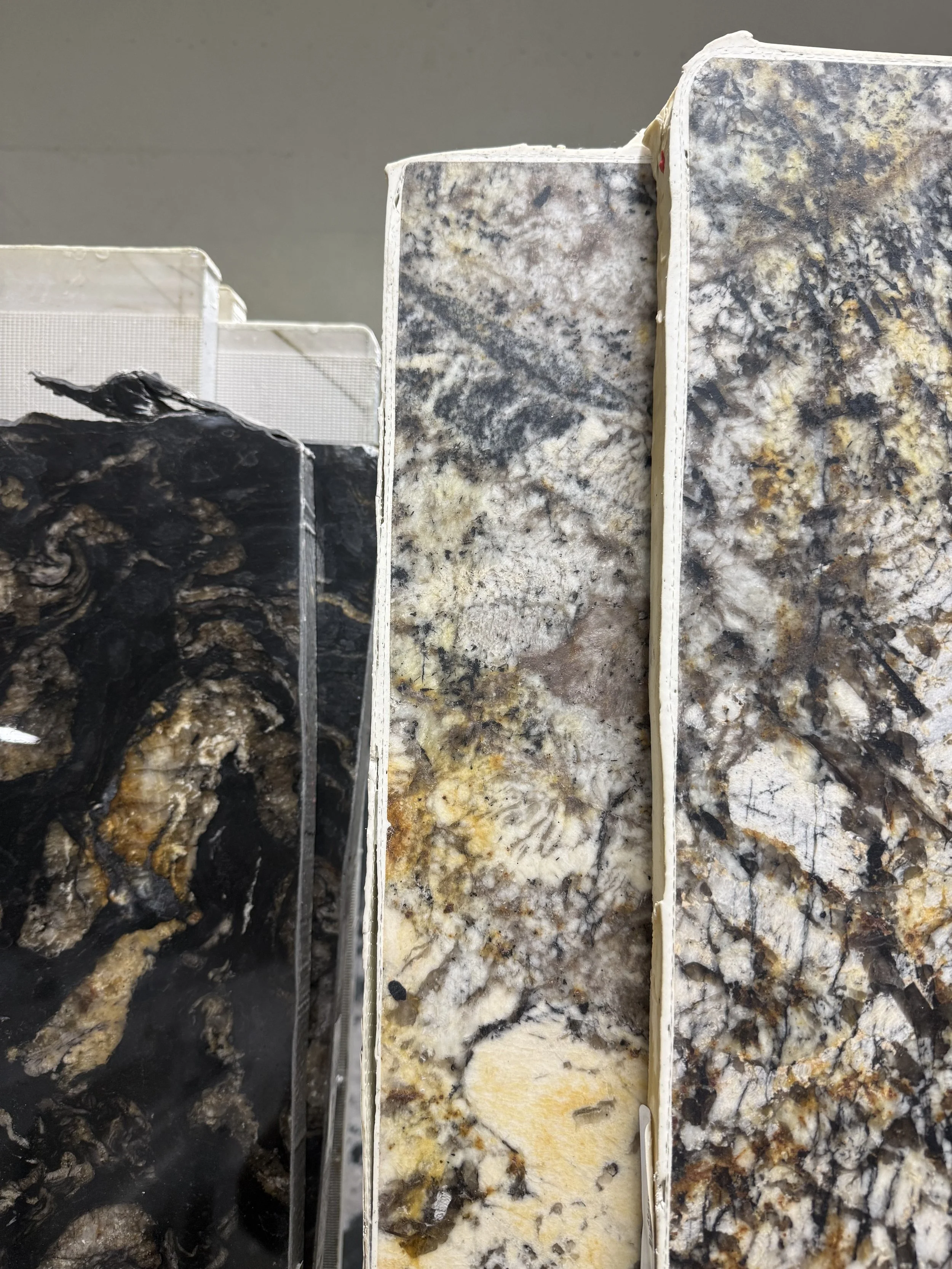
1. FISSURES, FRACTURE LINES, AND PITS
Run your hand slowly across the surface of a slab. If you feel small fissures or pits, don’t panic—minor imperfections are common in natural stone and are often manageable during fabrication. However, if cracks are widespread (especially near slab edges), it may be best to select an alternative material.
2. RESIN / EPOXY FILLINGS
During the quarrying process, larger natural voids are sometimes filled with resin/epoxy to preserve the slab. These fillings are color-matched as best as possible, but they often vary slightly in tone or texture.
👉 Things to know about resin/epoxy fillings:
They can appear dull compared to the natural shine of the stone.
Cutting or repairing near resin/epoxy spots can be more difficult.
While not a dealbreaker, they may cause limitations during fabrication.
While structurally sound, resin/epoxy fillings may compromise the aesthetics of the material.
3. DULL SPOTS
It’s common to find duller areas near the slab’s edges, where the polish may have been cut short. In many cases, these can be avoided during fabrication as long as the slab has enough usable material for your project.
In addition, the variation of minerals that make up a material, due to varying hardness and softness, can cause a difference within the depth of shine that’s seen across the face of the material when viewed as a whole.
4. SCRATCHES
Natural stone slabs sometimes display surface scratches. Many of these can be addressed during fabrication, but deep or extensive scratches can be more problematic.
💡 Pro Tip: Always examine the slab from multiple angles (straight on and from the side) to spot scratches that may not be visible at first glance.
5. NETTING
If you see a mesh-like netting applied to the back of a slab, it’s a sign the stone is more fragile. While still usable, these slabs can be prone to chipping or pitting and may require extra care during fabrication.
The netting is added when the block of stone is cut into slabs and is designed to add structural integrity to the material.
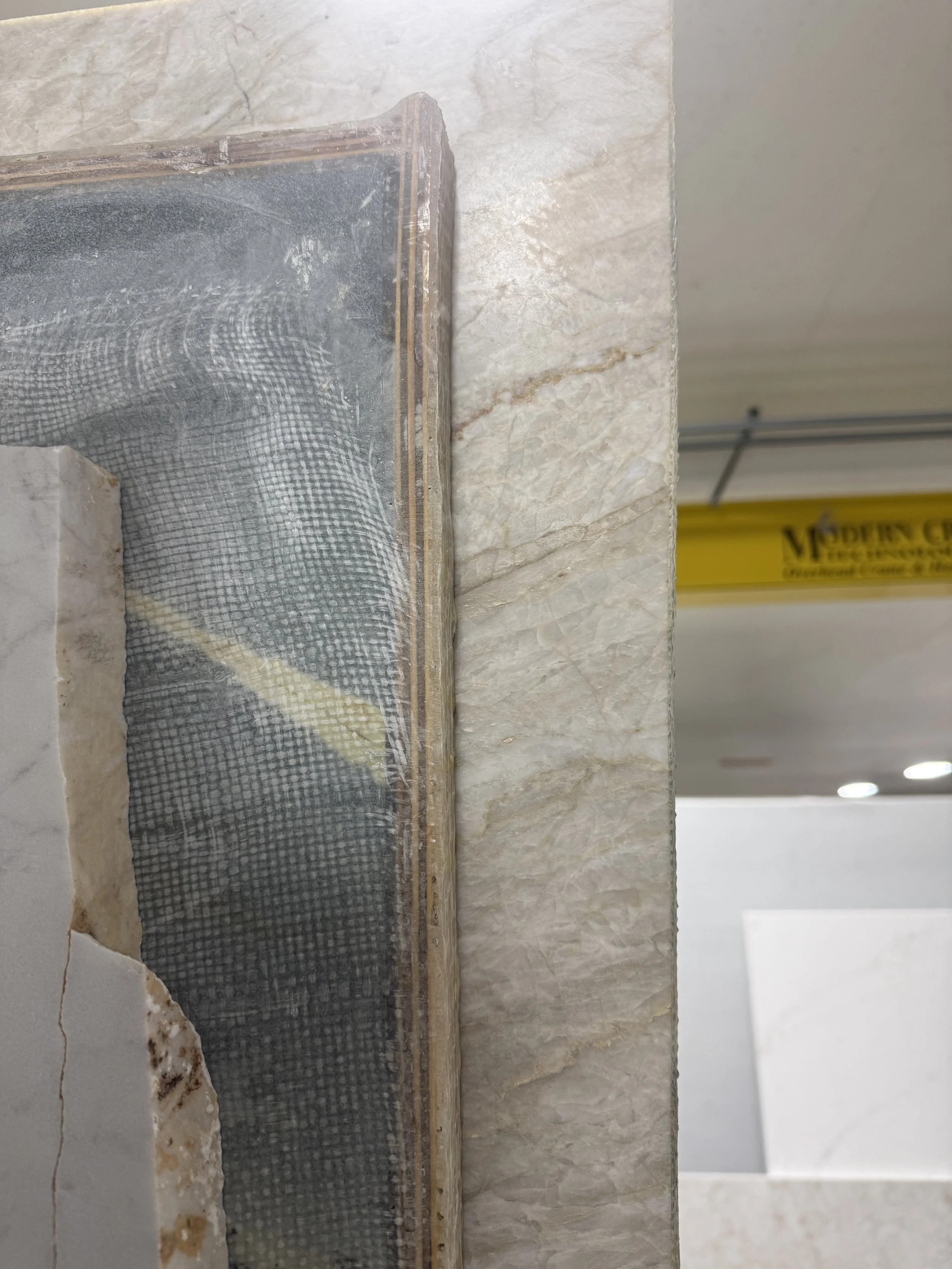
6. FIBERGLASS BANDING
Some slabs are reinforced with fiberglass bands along all edges. This indicates the material is especially delicate and more labor-intensive to fabricate.
While these slabs can be breathtaking, they often come with higher labor costs due to the complexity of handling and installation.
FINAL THOUGHTS
Choosing natural stone is an investment in the beauty and value of your home. While every slab is unique, being aware of these potential imperfections will help you make a confident, informed decision.
At Capital Granite, we’re committed to guiding you through the process and helping you select a material that combines lasting durability with timeless beauty.